Photo Credits: Submitted
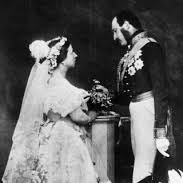
Pictured: Queen Victoria and Prince Albert
The ATU History Club is one of ATU’’s smaller groups, but no less interesting, with the motto “We take the homework out of history.” They often put on historical presentations and are planning a future one about historical video games. If anyone is interested in collaborating with the club on the history of a home country or the history of math, they would love to hear from you! The club is hoping to take a field trip to Little Rock to see a Turkish submarine and a tugboat from Pearl Harbor. The most recent meeting included presentations on historical love stories in honor of Valentine’s Day.
The first story was about Queen Victoria and Prince Albert, who met in 1836 at her 17th birthday celebration. They were first cousins, but many historians regard their romance as one of “love at first sight.” In fact, she proposed to him just five days after their second meeting in 1839, although it was partly to get away from her mother. Their wedding started the trend of white wedding dresses. They had nine kids (four boys and five girls) over 17 years. Though they were a royal family, they loved a more traditional lifestyle. They all wore ordinary clothes around their home and implemented the traditions of Christmas tree decorating and gift giving. Albert took charge of family matters while Victoria handled the royal side of their life, but they were invaluable to each other. Beyond their personal affection, they both loved new technology, going so far as to modernize the royal home with electric lights and telegraphs. Sadly, after 21 years of marriage, Prince Albert died in 1861. Queen Victoria was devastated. She wrote in her diary: “My life as a happy one is ended,” and wore black mourning garments until her death in 1901. Victoria mourned her husband longer than they were married. She never remarried and withdrew from the public for a decade after his death. She only came back into public view to commemorate her late husband with a memorial in Hyde Park and a concert hall named after him. Often royal marriages are rocked with scandals, affairs, and forced marriages. Theirs, however, was a genuine, true love that was cut short too soon.
The second presentation was about a mythical Japanese couple, Izanagi and Izanami. They were said to be descended from a line of Kami, making them creator gods. The myths say that together, the two of them dipped a heavenly spear into the ocean. When they raised it, several drops fell into the sea, becoming the islands of Japan. After land was made, the two gods built a ceremonial pillar for a fertility ritual. Their first child, Ebisu, was born boneless and later became the Kami of good luck. Izanami then gave birth to multiple Kami, including the Kami of fire, Kagu-Tsuchi. Unfortunately, she died during his birth. In a haze of grief and rage, Izanagi killed their son, cutting him up and dispersing the pieces around the islands. This is said to have created the volcanoes of Japan. In an attempt to see his beloved wife again, Izanagi traveled to Yomi, the Shinto underworld. Sadly, by the time he found Izanami, the darkness had gotten to her, leaving her as a corrupt shell of the woman he loved. He fled, which enraged her. She sent an army of demons after him, but he made it safely to the surface and closed the entrance. Izanami cursed him and the world, saying that thousands of people would die every day. He promised that he would make sure more people were born than died each day to keep the balance.
The final presentation was on a historical, but scandalous couple: Alexander Hamilton and Maria Reynolds. They met while he was working on a financial plan for Congress, and she showed up begging for help. Hamilton walked her home where he was then seduced by Maria. He kept going back, to the point where her husband found out. His response was to blackmail Hamilton for money. Desperate to maintain his reputation, Hamilton agreed to pay. Unfortunately for him, James Monroe followed the money trail and accused him of embezzlement. Hoping to save his position, Hamilton admitted to the affair. In fact, he released the Reynolds Pamphlet to the public, detailing the whole situation so that no one could accuse him of being dishonest. This backfired, as some historians believe that’s why he never became president.
From royal devotion to mythological tragedy to political scandal, the ATU History Club’s Valentine’s meeting proved that love stories have shaped history in many ways. Students interested in future presentations can attend the March 3 meeting (Witherspoon 238 at 5:30 p.m.) or contact the club for more information.